
"So you're a linguist - how many languages do you speak?" this is a typical reaction one may get when they tell someone that they're a linguist. However, describing as many languages as possible is only a tiny part of what linguistics as a scientific discipline deals with.
Many people do not have a clear idea of what linguistics is and what linguists actually do. As a linguist myself, I find it fascinating that by producing sounds and gestures, we are able to share our most complex thoughts and private feelings with each other in a seemingly effortless way. In this post, I want to use an example to illustrate the diversity of methods with which linguistics approaches this puzzle. Here is an example:
One person - a German speaker - asks: Wie viele Schüler waren anwesend? (which corresponds to: how many pupils were in class this morning?) and another replies: Alle waren nicht anwesend. (which translates into: no one was there or not all were there depending on how you pronounce it).
What's interesting about this response "Alle waren nicht anwesend." is that it can describe two very different situations. Like a word with multiple meanings, except on the level of the whole sentence: We are dealing with so-called linguistic ambiguity. For the interpretation, the intonation, or prosody, with which we articulate the utterance, is crucial. If, for example, the main stress is on alle, we think of an empty classroom, but if we have a rising and falling pitch, we imagine that some of the students were probably present, but not all of them. Try to listen to the following audio clips and compare the intonation. Even if you don't speak German, you can probably hear the difference.
Note that this ambiguity does not necessarily exist in other languages. In English, for example, there is no way to invoke these two situations just by changing the pronunciation or emphasis:


But how can we explain the way that this ambiguity arises? Linguistics examines language at different levels such as sound, grammar and meaning to investigate how the connection between sound and the interpretation of meaning works in a given communicative situation. Here, the comparative analysis of different languages comes into play, as we have already discussed when trying to translate the German answer to English. Another example is a language such as Greek, in which prosody alone is sufficient to distinguish between a statement such as "Melanie is getting angry" and a question such as "Is Melanie getting angry?". The different prosody of the corresponding Greek utterance η Мέλανη θυμώνει is shown clearly in a study by Charalambos Themistocleous in the fundamental frequency curve (see Themistocleous, 2025, top of page 4).
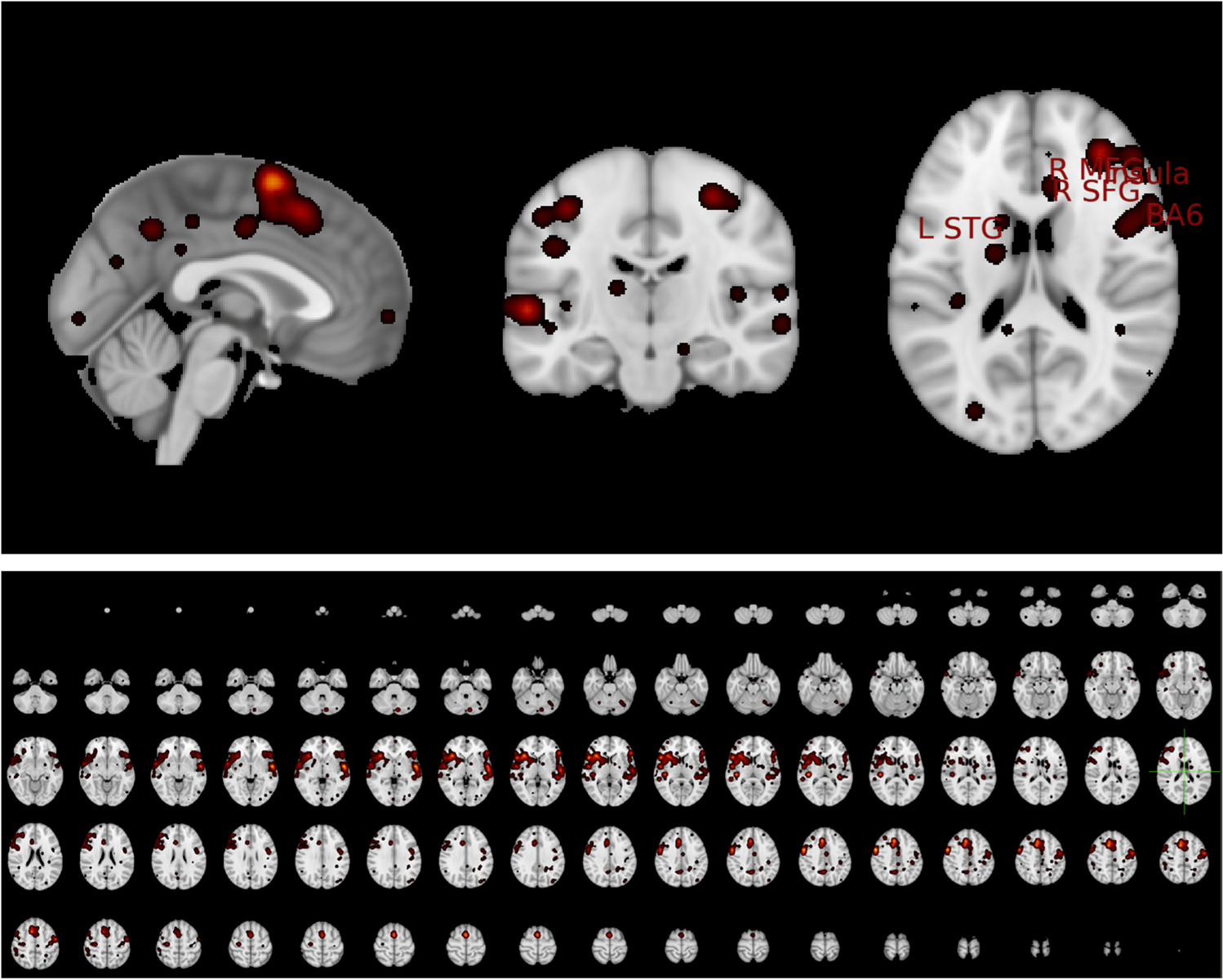
This only covers a small part of the various linguistic disciplines. Psycholinguistics and neurolinguistics examine the cognitive and neural foundations of speech production and comprehension. In a recently published meta-study, Themistocleous (2025) shows that the left hemisphere of the brain is especially involved in processing linguistic aspects of prosody (see the figure above). In sociolinguistics, the social dimension of language use comes to the fore. How do we use speech melody and rythm as a tool to establish and uphold identity in our peer groups? Another central area in linguistics is the modeling of language and speakers in computational linguistics. The recent AI boom in large language models such as ChatGPT directly proves their relevance. For a long time, synthetic speech sounded artificial, but now we are surrounded by deceptively real synthetic speech. In clinical linguistics, linguists deal with speech disorders and their treatments. Disordered prosody is a key feature of some forms of pathological speech impairment such as Parkinson disease. This list is far from being exhaustive and further fields of linguistic research could be added.
All of these linguistic disciplines and perspectives are represented here at Sprachschmiede, allowing you to partake in the scientific process yourself. Take a look at one of our projects and experience for yourself how diverse and rich linguistic research is - without sacrificing the fun of doing it.
Comments